Austria's Evolving Bonus Structures: How Seasonal Promotions Reshape Player Choices in Regulated Poker and Slot Environments
Rafael Griffin · Aug 18, 2026

Austria's Evolving Bonus Structures: How Seasonal Promotions Reshape Player Choices in Regulated Poker and Slot Environments
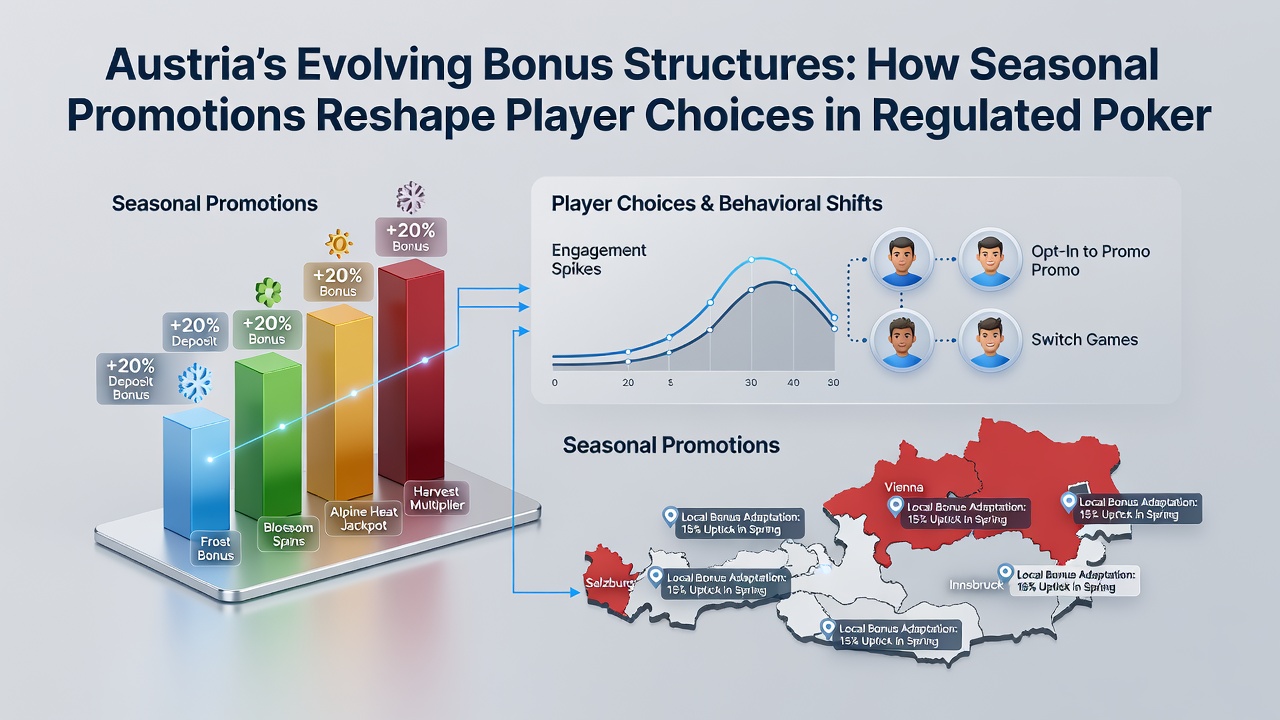
Austria maintains a tightly regulated gambling framework under the Glücksspielgesetz where licensed operators must structure bonuses around clear wagering requirements and player protection measures, and seasonal promotions have become a key mechanism that shifts how participants allocate time and funds between poker tables and slot machines throughout the year. Operators adjust deposit matches, free spins, and rakeback deals to align with national holidays, sporting events, and tourism peaks, which in turn influences whether players gravitate toward skill-based poker variants or chance-driven slots.
Research from the Austrian Federal Ministry of Finance tracks how these timed incentives correlate with changes in game-type participation, revealing that summer campaigns tied to Alpine festivals and outdoor events often boost slot engagement through volume-based free spin packages while poker sees more modest rake reductions. Data collected across licensed platforms shows that during peak summer months participation in progressive jackpot slots rises notably because operators front-load bonus rounds with lower entry thresholds, allowing casual visitors to test multiple titles without committing larger bankrolls immediately.
Seasonal Timing and Regulatory Boundaries
Winter promotions centered around Christmas markets and New Year events tend to emphasize poker leaderboards with cashback tiers that reward consistent play across multiple sessions, because regulators require operators to demonstrate that such offers do not encourage excessive time at the tables. Observers note that these winter structures often include loyalty multipliers valid only between December and February, creating a temporary preference shift where experienced poker participants extend their sessions to unlock higher rebate percentages. In contrast, slot-focused campaigns during the same period rely on daily free spin calendars that reset each morning, encouraging shorter but more frequent logins rather than prolonged single sessions.
By August 2026 several major licensees plan to introduce harvest-themed bonus ladders that combine elements of both game types, offering hybrid rewards where slot spins convert into poker tournament tickets once certain volume thresholds are met. These layered offers must still comply with the 2021 amendments to the national gambling ordinance, which cap bonus values relative to average player deposits and mandate transparent display of expiry dates. Figures released by the ministry indicate that platforms adopting hybrid structures in previous seasons recorded measurable redistribution of play hours away from pure slots toward mixed activity without increasing overall problem gambling indicators flagged by the central monitoring system.
Player Response Patterns Across Game Types
Studies conducted by the European Gaming and Betting Association document how seasonal bonuses alter decision-making processes, showing that poker players respond more strongly to time-limited rake races because these rewards directly offset the skill edge they already possess, whereas slot enthusiasts prioritize instant-win elements such as bonus buy features bundled with deposit matches. One analysis covering three Austrian-licensed sites found that during autumn beer-festival periods, average poker session length increased by roughly eighteen percent when operators attached leaderboard prizes to specific stake levels, while slot spin counts rose mainly through automated reload bonuses that triggered after every third deposit.
Those who track regulatory filings observe that operators must submit each seasonal campaign for pre-approval at least thirty days in advance, which limits the speed at which new mechanics can appear yet also ensures that promotions remain consistent with responsible gaming standards. This approval window explains why summer 2025 campaigns largely reused winter frameworks with adjusted artwork rather than introducing entirely novel structures, resulting in predictable player migration patterns that repeat annually. Data from independent audits further indicates that platforms offering transparent bonus histories see higher retention among both poker and slot segments because participants can review past offers and plan their activity around recurring calendar windows.
Impact on Choice Architecture
Operators integrate behavioral nudges into their interfaces by highlighting seasonal leaderboards on the poker lobby while placing slot free-spin bundles on the homepage carousel, and researchers have measured how these placement decisions interact with promotion timing to steer traffic. When a winter campaign emphasizes poker cashback, the same players who previously favored high-volatility slots show increased table selection in mid-stakes tournaments, particularly when the bonus includes satellite entries to larger guaranteed prize pools. Conversely, summer slot pushes that bundle spins with modest poker satellite tickets produce smaller crossover effects, suggesting that skill-oriented participants evaluate the value of such tickets differently than casual slot users.
Academic work published through the University of Vienna’s gambling research unit examines these dynamics through anonymized transaction logs, revealing that players with prior poker experience convert seasonal slot bonuses into table time at higher rates than novices, because they already understand bankroll management principles that apply across both formats. The same dataset shows that first-time participants drawn in by large summer deposit matches remain predominantly within the slot ecosystem unless the operator provides explicit conversion paths such as bonus funds that unlock poker freerolls after initial wagering completes.
Conclusion
Austria’s regulated environment continues to evolve its bonus frameworks in response to both seasonal demand and ongoing legislative oversight, producing measurable shifts in how participants distribute activity between poker and slots. Operators that align promotions with regulatory calendars while maintaining clear conversion mechanics between game types record sustained engagement without triggering additional compliance reviews. As August 2026 approaches, the introduction of hybrid harvest campaigns will provide further data on whether combined incentives can balance player preferences across skill and chance formats while remaining within established legal parameters.